
Let’s head back to 1876. Alexander Graham Bell sat in an oak-panelled Boston office and made the world’s very first phone call. Suddenly, communication changed forever. Information no longer needed to be sent via long, often manual processes; the human voice now moved at the speed of electricity.
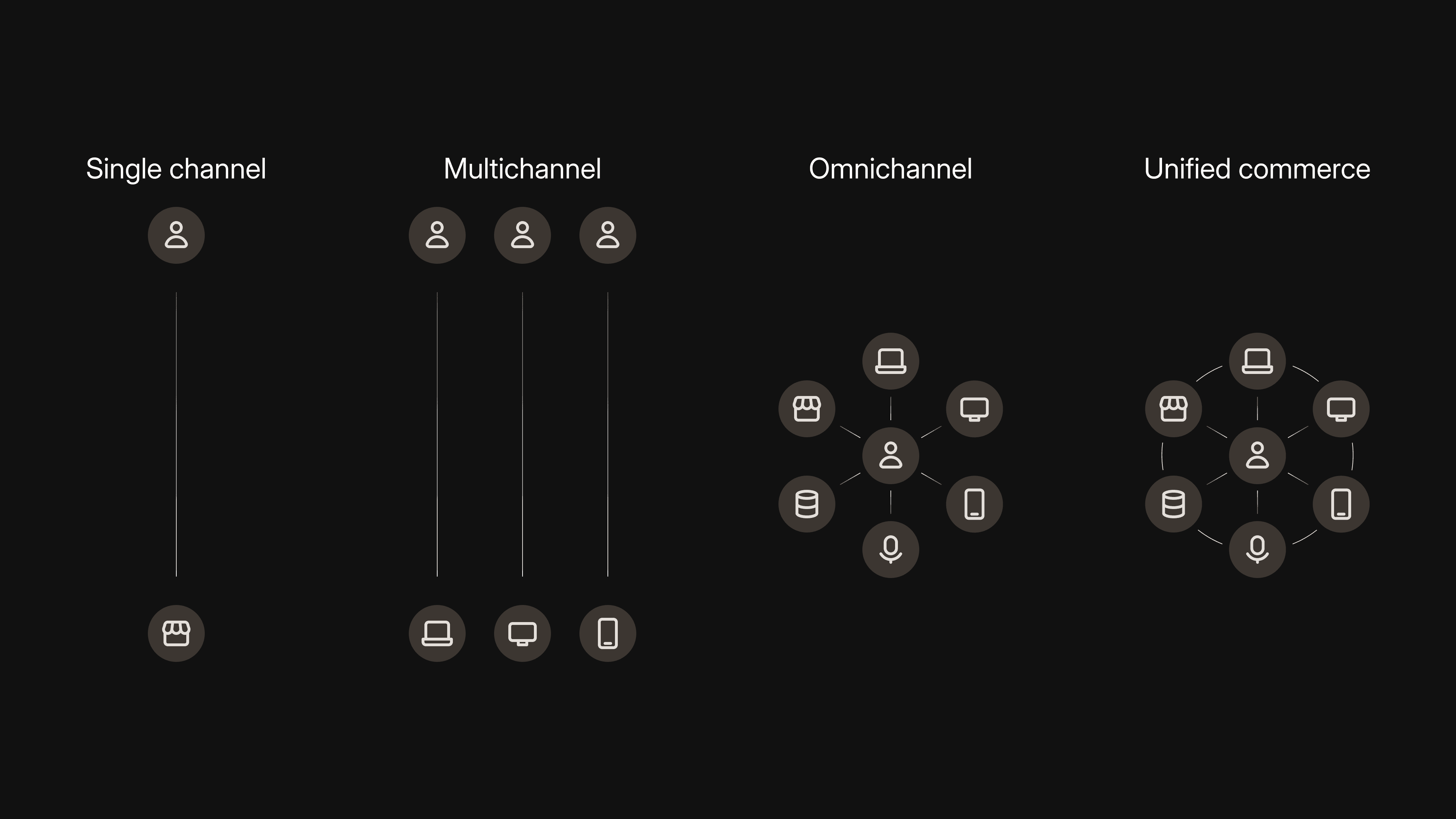
Unified commerce might not be quite as groundbreaking as the invention of the telephone, but for a modern business trying to scale across Europe, the advantages it offers are remarkably similar. It is the shift from sending messages between disconnected systems to having one single, continuous conversation.
In this guide, we explain how unified commerce helps you fix the engine of your business, remove the friction from your operations, and finally get a clear view of your bottom line.
Let’s head back to 1876. Alexander Graham Bell sat in an oak-panelled Boston office and made the world’s very first phone call. Suddenly, communication changed forever. Information no longer needed to be sent via long, often manual processes; the human voice now moved at the speed of electricity.
Unified commerce might not be quite as groundbreaking as the invention of the telephone, but for a modern business trying to scale across Europe, the advantages it offers are remarkably similar. It is the shift from sending messages between disconnected systems to having one single, continuous conversation.
In this guide, we explain how unified commerce helps you fix the engine of your business, remove the friction from your operations, and finally get a clear view of your bottom line.
Let’s head back to 1876. Alexander Graham Bell sat in an oak-panelled Boston office and made the world’s very first phone call. Suddenly, communication changed forever. Information no longer needed to be sent via long, often manual processes; the human voice now moved at the speed of electricity.
Unified commerce might not be quite as groundbreaking as the invention of the telephone, but for a modern business trying to scale across Europe, the advantages it offers are remarkably similar. It is the shift from sending messages between disconnected systems to having one single, continuous conversation.
In this guide, we explain how unified commerce helps you fix the engine of your business, remove the friction from your operations, and finally get a clear view of your bottom line.
Let’s head back to 1876. Alexander Graham Bell sat in an oak-panelled Boston office and made the world’s very first phone call. Suddenly, communication changed forever. Information no longer needed to be sent via long, often manual processes; the human voice now moved at the speed of electricity.
Unified commerce might not be quite as groundbreaking as the invention of the telephone, but for a modern business trying to scale across Europe, the advantages it offers are remarkably similar. It is the shift from sending messages between disconnected systems to having one single, continuous conversation.
In this guide, we explain how unified commerce helps you fix the engine of your business, remove the friction from your operations, and finally get a clear view of your bottom line.